Beyond the Headlines: Modern Indian Sculptors Who Deserve Greater Attention
Why So Many Great Masters of Pre-Independence Indian Sculpture Remain Outside the Gallery and Auction Spotlight
Walk into any major art auction or browse the catalogue of a leading gallery, and a familiar pattern quickly emerges.
Paintings dominate the headlines. 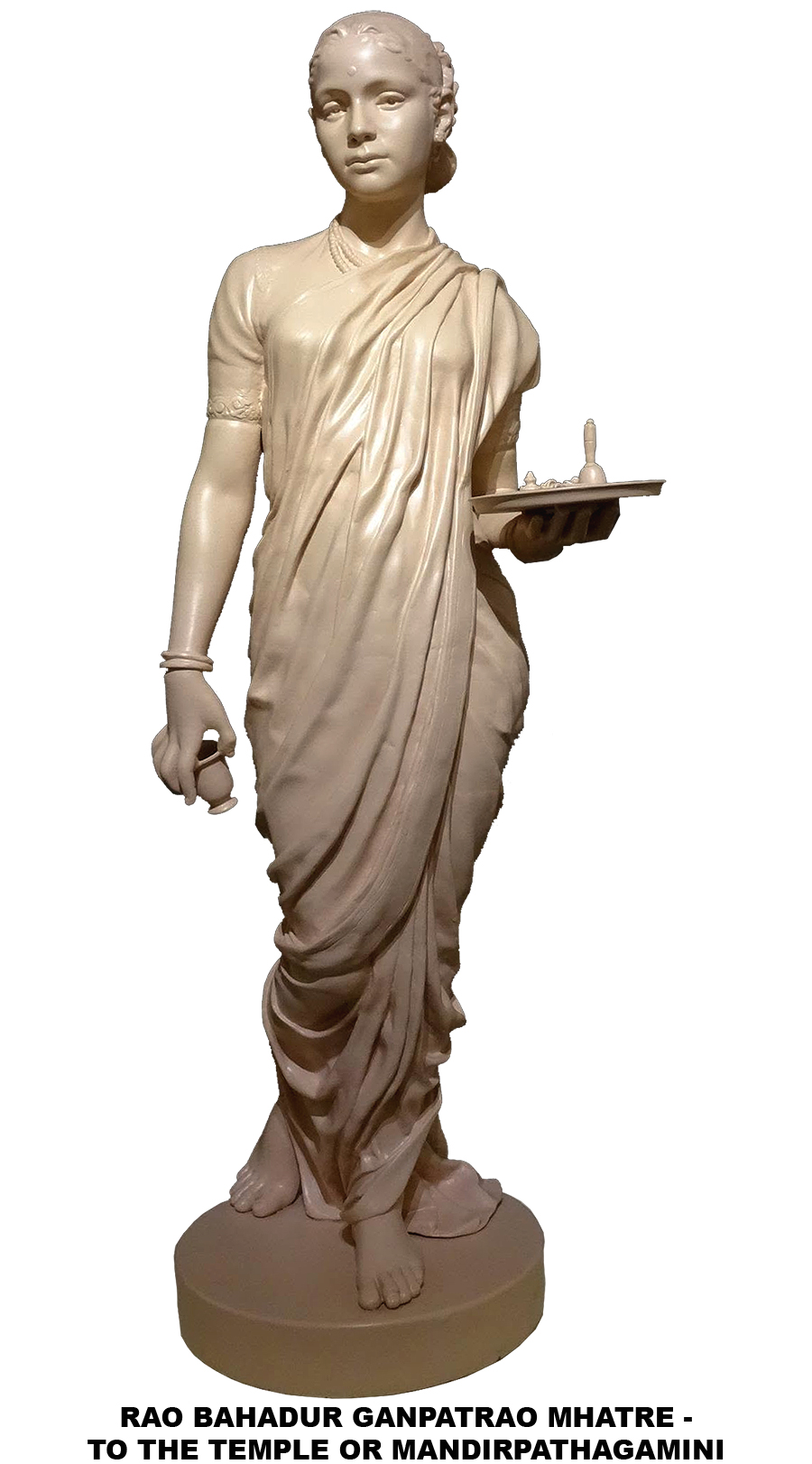
Collectors discuss Ravi Varma, Abanindranath Tagore, Gaganendranath Tagore, Jamini Roy, Amrita Sher-Gil, Husain, Raza, and Souza. Museums dedicate entire galleries to painters. Books, exhibitions, catalogues, and academic studies overwhelmingly focus on painting.
Meanwhile, many of the sculptors who helped shape modern Indian art remain surprisingly obscure.
This imbalance raises an uncomfortable question.
How did a civilisation that produced the sculptural wonders of Sanchi, Amaravati, Ellora, Konark, Khajuraho, Chola bronzes, and countless temple traditions become a nation that largely forgot its modern sculptors?
The answer lies partly in history.
Modern Indian sculpture developed under conditions very different from painting. Sculptures required greater resources, more space, specialised materials, technical assistance, foundries, and often public patronage. Paintings could be exhibited, transported, reproduced, and sold more easily. As the art market expanded during the twentieth century, painting naturally became the dominant medium for private collectors.
The consequence was that many important sculptors gradually disappeared from public memory.
Yet the story of modern Indian sculpture cannot be understood without them.
 Among the earliest pioneers was Ganpat Kashinath Mhatre (1876–1947), whose celebrated sculpture The Temple Woman achieved international recognition at the turn of the twentieth century. At a time when Indian artists rarely received attention abroad, Mhatre demonstrated that Indian sculptors could engage confidently with academic realism while retaining indigenous themes. Today, however, his name is known primarily to specialists.
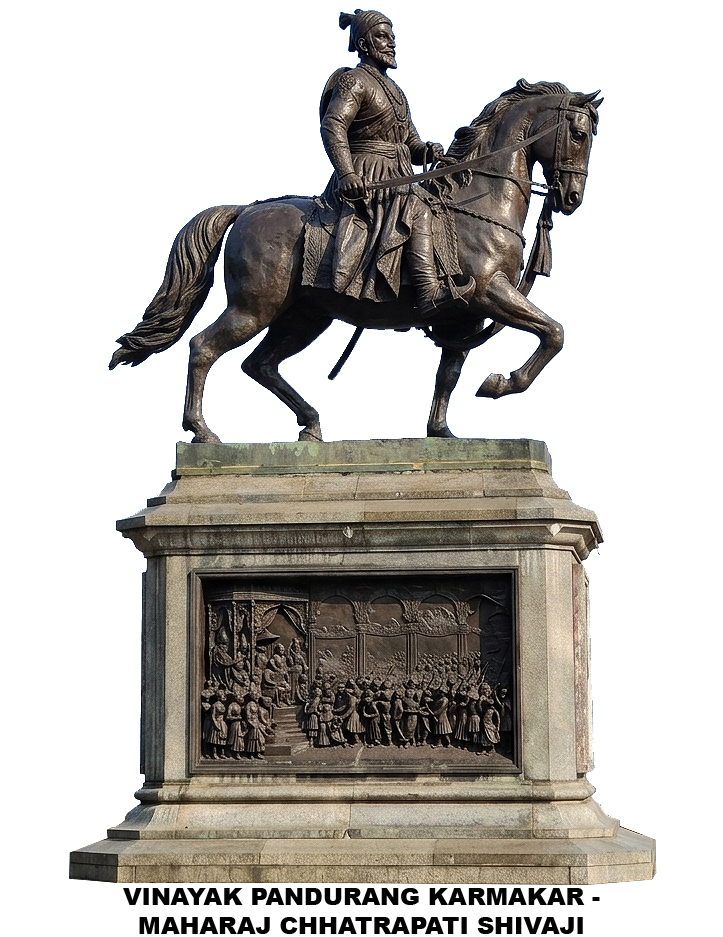
Another remarkable figure was Vinayak Pandurang Karmarkar (1891–1967). Trained at the Sir J.J. School of Art, Karmarkar produced some of the most accomplished sculptures of the pre-Independence period. His portraits, public monuments, and figurative works reveal extraordinary technical skill and sensitivity. Yet despite his achievements, he remains far less recognised than many painters of comparable stature.
Equally important was Debi Prasad Roy Chowdhury (1899–1975), whose influence extended beyond his own artistic practice. As principal of the Government School of Arts and Crafts, Madras, he transformed sculpture education in southern India and inspired generations of artists. His monumental Triumph of Labour remains one of the most significant public sculptures created in modern India, yet his name rarely appears in mainstream discussions of Indian art.
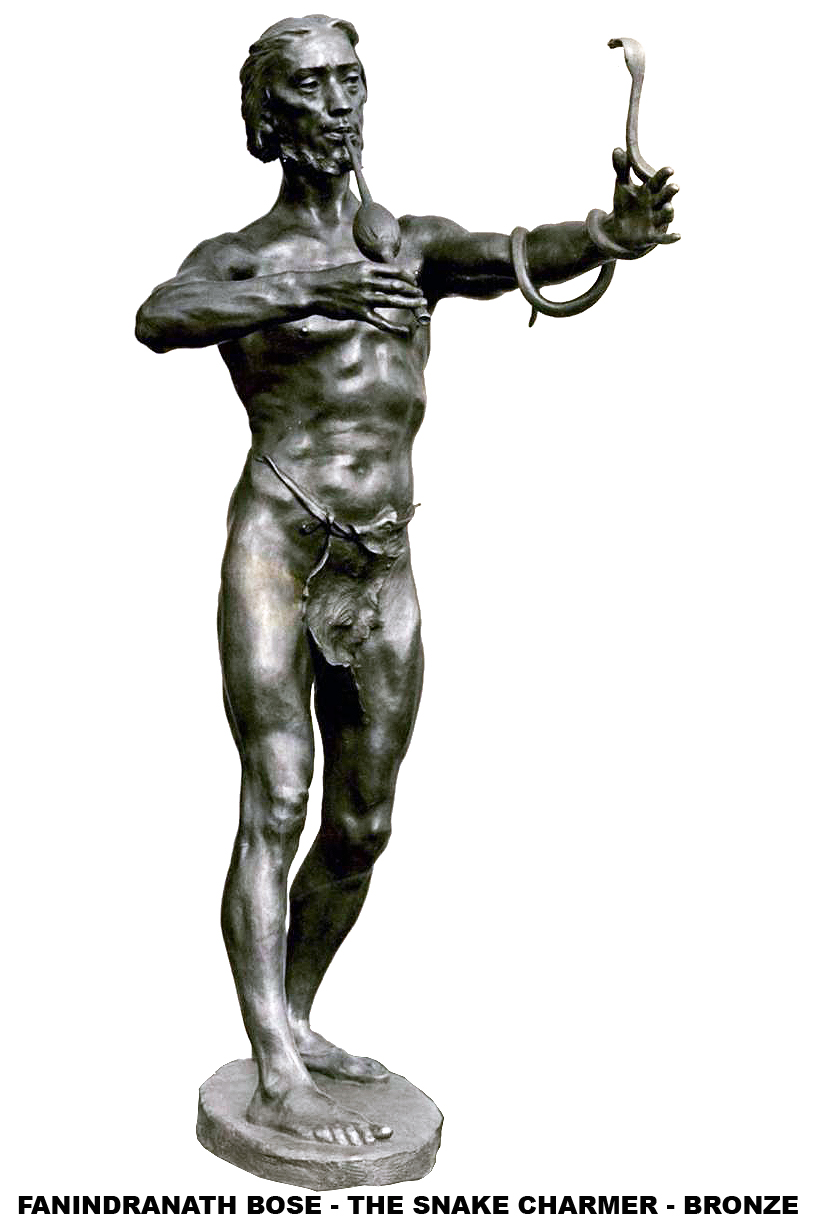
The early twentieth century also witnessed the emergence of artists such as Fanindranath Bose (1888-1926), one of Bengal's pioneering sculptors, whose public monuments and portrait busts helped define the visual language of civic commemoration. Like many of his contemporaries, his contributions remain insufficiently studied.
Even among better-known figures, recognition often arrived unevenly. Ramkinkar Baij is today rightly celebrated as one of the greatest sculptors of modern India. Yet for decades his importance was understood primarily within academic circles. Only in recent years have institutions, collectors, and scholars begun fully appreciating the revolutionary nature of his work.
The relative invisibility of these artists reflects broader structural issues. 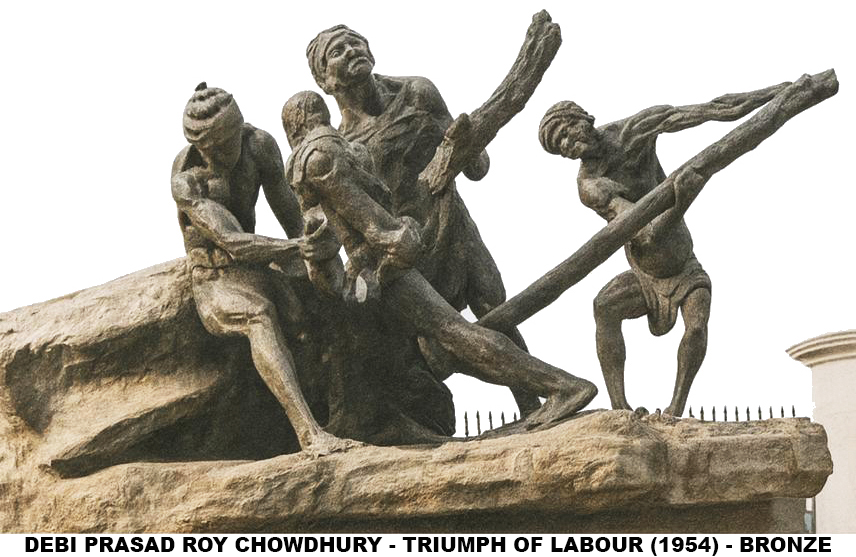
Unlike paintings, sculptures are difficult to reproduce in books and magazines. Their physical presence, scale, texture, and relationship to space often resist photographic documentation. Many significant sculptures remain installed in public spaces where they are overlooked by daily commuters. Others survive in government institutions with limited resources for conservation and interpretation.
There is also the question of the art market.
For much of the twentieth century, Indian collectors overwhelmingly preferred paintings. Sculpture occupied a relatively small segment of the market, resulting in fewer exhibitions, fewer publications, and less commercial visibility. Consequently, many sculptors never developed the market narratives that helped sustain the reputations of painters.
Art history itself bears some responsibility.
 The dominant narratives of Indian modernism have often been constructed around painting movements—the Bengal School, Santiniketan, the Progressives, Baroda, and contemporary painting practices. Sculpture frequently appears as a secondary chapter rather than a parallel history.
Yet recent scholarship suggests that this imbalance is beginning to change.
Collectors are showing renewed interest in sculpture. Museums are revisiting neglected archives. Scholars are reassessing the contributions of artists who worked outside the established canon. Books, exhibitions, and research projects devoted to Indian sculpture have increased significantly over the past two decades.
This reassessment is long overdue.
The history of modern Indian sculpture is not merely a footnote to painting.
It is a story of artists who negotiated colonial academic traditions, indigenous sculptural heritage, public patronage, nationalism, modernism, and material experimentation. It is a history rich with innovation, ambition, and remarkable artistic achievement.
Perhaps the most important lesson is that recognition and importance are not always the same thing.
Many of India's greatest sculptors never achieved the fame accorded to their painterly counterparts.
Yet their works continue to shape public memory, occupy civic spaces, and define the visual culture of modern India.
As collectors, scholars, and institutions increasingly look beyond familiar names, the rediscovery of these sculptors offers an opportunity to broaden our understanding of Indian art history.
The question is no longer whether these artists deserve greater recognition.
The question is why it has taken us so long to notice them.
Footnotes
- Partha Mitter, Art and Nationalism in Colonial India, 1850–1922, Cambridge University Press, 1994.
- R. Siva Kumar (ed.), Santiniketan: The Making of a Contextual Modernism, National Gallery of Modern Art, 1997.
- Tapati Guha-Thakurta, The Making of a New Indian Art, Cambridge University Press, 1992.
- Geeta Kapur, When Was Modernism: Essays on Contemporary Cultural Practice in India, Tulika Books, 2000.
- Various catalogues and archival records of the Sir J.J. School of Art, Government College of Art & Craft, Kolkata, and Government College of Fine Arts, Chennai.
Selected Bibliography
- Guha-Thakurta, Tapati. The Making of a New Indian Art. Cambridge University Press, 1992.
- Mitter, Partha. Art and Nationalism in Colonial India. Cambridge University Press, 1994.
- Siva Kumar, R. (ed.). Santiniketan: The Making of a Contextual Modernism. NGMA, 1997.
- Kapur, Geeta. When Was Modernism. Tulika Books, 2000.
- Ghosh, Mrinal. Shaping Bengal: A Chronicle of Modern Sculpture Aakriti Art Gallery,2025
_______________________________________________________________________________________________________________________________________________________________________
Research & Compiled by Aakriti Art Gallery team
Most read articles
A Star Amongst Too Many: Chandra Bhattacharjee at Birla Academy of Art & Culture
Chittaprosad Bhattacharya: Art as Witness, Image as Resistance
The Resurgence of the Indian Art Market
The Indian Art Market Comes of Age

Ramkinkar Baij’s Bronze Sculptures: A Modernist Legacy in Form and Vitality.
Comments
Join the Discussion
Please login to post comments.
Login